Si vous vous renseignez sur les fixations de ski de randonnée, vous avez probablement rencontré deux termes souvent utilisés indifféremment : « fixations à inserts » et « fixations tech ». Cela peut prêter à confusion pour les débutants en ski hors-piste, surtout lorsqu’il s’agit de comprendre la différence entre ces fixations et les fixations alpines traditionnelles ou les fixations à cadre. La réalité est plus simple qu’il n’y paraît, mais comprendre les nuances vous permettra de mieux choisir votre équipement. Ce guide complet clarifiera la terminologie, expliquera le fonctionnement de ces fixations et vous aidera à déterminer si elles sont adaptées à vos aventures hors-piste.
Fixations à inserts et fixations tech : c'est la même chose ?

Abordons tout de suite la question essentielle : fixations à inserts et fixations pintech sont-elles identiques ? Ces termes sont utilisés indifféremment dans le monde du ski, «tech » étant l’abréviation de « fixations techniques », tandis que « inserts » fait référence aux inserts métalliques qui relient la chaussure à la fixation. On les appelle aussi parfois simplement « fixations de randonnée », bien que ce dernier terme puisse également inclure les fixations à cadre.
La terminologie remonte à l'invention de ce système de fixation par Dynafit en 1986, lors du lancement des fixations « Low Tech ». Ce nom faisait référence à leur conception mécanique simple, utilisant des inserts au lieu des systèmes mécaniques complexes des fixations alpines. L'expiration du brevet en 2012 et l'arrivée de concurrents sur le marché ont donné lieu à diverses appellations, mais toutes désignent la même technologie de base.
Lors de vos achats ou recherches, ne vous préoccupez pas de la différence entre les fixations à inserts et les fixations tech : elles sont identiques. L’important est de comprendre en quoi elles diffèrent des fixations à cadre et des fixations alpines traditionnelles, et de déterminer si ce style correspond à vos besoins en ski.
Comment fonctionnent les fixations à inserts/techniques
Comprendre le fonctionnement des fixations à insert permet de comprendre pourquoi elles ont révolutionné le ski hors-piste et pourquoi elles diffèrent si fondamentalement des autres types de fixations.
Le système de connexion par broches
Au cœur de chaque fixation à inserts se trouve un système de goupilles simple mais élégant. La butée avant est équipée de deux petites goupilles métalliques montées sur des bras à ressort. Ces goupilles s'insèrent dans des inserts métalliques intégrés à l'avant des chaussures de ski de randonnée compatibles. Lorsque vous chaussez la fixation, les goupilles se clipsent dans ces inserts, assurant ainsi la fixation de votre chaussure au ski au niveau des orteils.
Le système de maintien du talon fonctionne de la même manière : deux ergots parallèles s’insèrent dans des fixations à l’arrière de la chaussure lorsque vous êtes prêt à descendre les pistes. En montée, les ergots du talon se désengagent complètement, permettant au talon de se soulever librement, le maintien restant assuré uniquement au niveau des orteils.
Ce système de fixation à goupille utilise beaucoup moins de matière que les fixations traditionnelles, ce qui permet une réduction de poids considérable. Une fixation de ski de randonnée complète peut peser entre 300 et 700 grammes, contre 1 500 à 3 000 grammes pour les fixations à cadre ou les fixations alpines.
Mode randonnée vs. mode ski
Le génie des fixations à inserts réside dans leur double fonctionnalité. En mode randonnée, la fixation au ski se fait uniquement au niveau des orteils. Lors de la montée, le talon se soulève naturellement, la chaussure pivotant autour de l'axe de fixation situé à l'avant du pied. Ce point de pivot, très proche de la plante du pied, crée un mouvement de marche naturel remarquablement proche de la marche ou de la randonnée.
La plupart des fixations de ski de randonnée sont équipées de cales de talon : de petites plateformes relevables qui surélèvent le talon dans les montées raides. Ces cales offrent généralement deux ou trois hauteurs différentes, permettant d’ajuster l’angle de position en fonction de la pente du terrain. De nombreuses fixations proposent également un mode plat ou sans cale pour les terrains faciles ou les mouvements de skating.
Passer du mode randonnée au mode ski ne prend généralement que quelques secondes. Il suffit de faire pivoter la talonnière (généralement de 90 degrés), ce qui positionne les ergots de talon pour accueillir votre chaussure. Posez le pied dans les ergots et vous voilà stabilisé pour la descente. La rapidité et la simplicité de cette transition deviennent de plus en plus précieuses avec l'expérience, notamment lors des changements de mode sur des crêtes exposées ou par conditions météorologiques difficiles.
Mécanismes de libération
Les caractéristiques de déclenchement représentent l'une des différences les plus importantes entre les fixations tech et les fixations alpines, et c'est un domaine qui nécessite une compréhension approfondie pour des raisons de sécurité.
Les fixations de ski de randonnée traditionnelles sont dotées d'un système de blocage fixe au niveau des orteils, généralement équivalent à un DIN 10-12 pour une fixation alpine. Cela signifie que la butée ne se déclenche que sous l'effet d'une force importante, et ce niveau de blocage n'est pas réglable. La talonnière, en revanche, offre généralement des réglages de déclenchement vertical et horizontal que vous pouvez adapter à votre poids, votre niveau et vos préférences.
Ce système de déclenchement diffère fondamentalement des fixations alpines, où le déclenchement se fait à la fois au niveau des orteils et du talon dans plusieurs directions selon des valeurs DIN standardisées. Les fixations de ski de randonnée se déclenchent principalement au niveau du talon, à la fois verticalement (vers le haut) et horizontalement (en rotation). Le maintien élevé et fixe au niveau des orteils assure la stabilité en ski engagé, mais peut s'avérer problématique en cas de chute.
Certaines fixations de ski de randonnée récentes ont pris en compte ces problématiques grâce à des innovations telles que les butées rotatives ou le réglage du maintien des orteils, rapprochant ainsi leurs caractéristiques de déclenchement des standards alpins. Ces avancées ont permis à certains modèles d'obtenir la certification TÜV selon la norme ISO 13992:2007 relative aux fixations de ski de randonnée, bien que cette norme diffère de la norme ISO 9462 qui régit les fixations alpines.

Avantages des fixations à inserts/techniques
La domination des fixations techniques sur le marché du ski hors-piste s'explique par plusieurs avantages convaincants qui en font le choix privilégié pour la plupart des pratiques de ski de randonnée.
Réduction de poids exceptionnel
La réduction du poids est l'avantage le plus évident des fixations à inserts. Comparées aux fixations à cadre, elles permettent généralement d'économiser 1 à 2 kilogrammes par paire, un poids qui serait autrement supporté à chaque pas sur la piste. Sur une randonnée de plusieurs milliers de pas, cette différence de poids se traduit par une fatigue considérablement réduite.
Mais l'avantage en termes de poids ne se limite pas à la simple masse. Grâce aux fixations à inserts, le talon se dissocie complètement du ski à la montée, évitant ainsi de soulever la fixation à chaque pas. Avec les fixations à cadre, l'ensemble reste fixé à la chaussure et se soulève à chaque foulée. Cette caractéristique des fixations à inserts, qui permet de « soulever la fixation sans effort » facilite la montée.
En ski-alpinisme, lors de longues traversées ou de séjours de plusieurs jours en refuge, la réduction du poids est un atout majeur. Moins vous dépensez d'énergie à l'ascension, plus vous en avez en réserve pour la descente et pour gérer les difficultés et les prises de décision inhérentes au terrain accidenté.
Mouvement naturel de foulée
Le positionnement du point de pivot des fixations à inserts offre une foulée remarquablement naturelle. Grâce à la proximité des inserts avec la zone de flexion naturelle du pied, la marche est fluide et efficace. À l'inverse, les fixations à cadres, dont le point de pivot se situe devant les orteils, induisent une démarche inconfortable et légèrement artificielle, particulièrement perceptible sur les longues approches.
Ce mouvement naturel réduit la tension sur vos chevilles, vos genoux et vos hanches. Lors de longues sorties en peaux de phoque, l'efficacité biomécanique est primordiale. De nombreux skieurs témoignent qu'en passant des fixations à cadre aux fixations à inserts, ils ressentent une sensation de légèreté incomparable, au-delà même de la réduction de poids réelle.
Transitions rapides
En montagne, la rapidité est essentielle. La météo change vite, les conditions se dégradent et il faut parfois passer rapidement de la montée à la descente. Les fixations à inserts excellent dans ces transitions rapides, la plupart des modèles permettant de changer de mode en moins de 10 secondes sans déchausser.
Cette efficacité devient cruciale sur les arêtes techniques, lors des périodes à risque d'avalanches où minimiser le temps d'exposition est primordial, ou lors de longues traversées avec de multiples changements de mode. Les fixations à cadre, en revanche, nécessitent souvent de déchausser pour changer de mode, ce qui rallonge et complexifie chaque transition.
Profil bas et hauteur de support
Les fixations Tech sont très basses sur le ski, ce qui maintient la chaussure au plus près de la neige. Cette faible hauteur améliore la stabilité, la précision des carres et les sensations générales sur les skis. La position du skieur, plus directe au-dessus des skis, optimise le transfert de puissance et la réactivité.
Les fixations à cadre, surtout les modèles anciens, peuvent avoir une hauteur de support de 40 à 50 mm, voire plus. Cette position surélevée rend les skis moins stables et moins réactifs, notamment sur neige variable ou sur neige dure.
Compatibilité des bottes avec les designs modernes
Bien que les fixations à inserts nécessitent des chaussures compatibles (nous y reviendrons plus tard), cette exigence est devenue moins contraignante au fil du temps. Les fabricants de chaussures de ski de randonnée modernes intègrent désormais des inserts même dans des modèles relativement rigides, orientés pour le freeride. Il y a cinq ans, choisir des fixations à inserts impliquait souvent de sacrifier la performance des bottes au profit de la compatibilité. Aujourd'hui, on trouve des chaussures rigides et performantes, offrant d'excellents modes de marche, qui fonctionnent parfaitement avec les fixations à inserts.

Inconvénients et limites des fixations techniques
Malgré leurs avantages, les fixations à inserts présentent des inconvénients réels qui peuvent avoir leur importance pour certains utilisateurs et certaines pratiques. Comprendre ces limitations vous permettra de choisir en toute connaissance de cause si les fixations à inserts sont adaptées à votre pratique du ski.
Compromis sur les performances en descente
La même conception légère qui fait la force des fixations de ski de randonnée en montée pose problème en descente. Avec seulement quatre petites broches reliant la chaussure à la fixation, la connexion offre intrinsèquement moins de stabilité et de transfert de puissance que la large plateforme sécurisée d'une fixation alpine ou à plaque.
En neige molle et poudreuse, cette limitation importe peu. La plupart des skieurs trouvent les fixations à inserts parfaitement adaptées au ski hors-piste et aux descentes en général. Cependant, sur neige dure, croûtée ou transformée, ces fixations transmettent davantage de vibrations directement aux pieds et offrent un amortissement moindre. L'expérience de ski est alors plus rude et moins maîtrisée qu'avec des fixations alpines.
L'attachement au talon des fixations à inserts traditionnelles autorise un certain mouvement latéral, contrairement aux fixations alpines. Ce jeu se fait sentir lors de virages serrés ou d'un ski agressif, créant une sensation de perte de précision et de manque de connexion. Certains skieurs le décrivent comme une sensation de « vibration » ou de « flou » dans certaines conditions.
Consistance des déclenchements des fixations de ski
Le système de blocage fixe au niveau des orteils et les différents mécanismes de déclenchement des fixations de ski de randonnée traditionnelles rendent leur comportement au déclenchement moins prévisible que celui des fixations alpines certifiées DIN. Dans certaines situations de chute, notamment celles impliquant des forces latérales à faible vitesse, les fixations de ski de randonnée peuvent ne pas se déclencher aussi systématiquement que les fixations alpines.
Cette incosistance alimente les débats sur la sécurité des fixations à inserts. Leurs partisans soulignent que les blessures graves liées à leur utilisation restent relativement rares et que les skieurs de randonnée expérimentés les utilisent en toute sécurité depuis des décennies. Leurs détracteurs, quant à eux, font remarquer que l'absence de tests standardisés et de déclenchement latéral des orteils accroît les risques, notamment pour les skieurs moins expérimentés ou ceux qui alternent entre ski en station et hors-piste.
La réalité est plus nuancée. Pour les skieurs de randonnée expérimentés qui connaissent les limites des fixations et adaptent leur ski en conséquence, les fixations à inserts offrent une sécurité suffisante. En revanche, pour les skieurs passant du ski de piste au ski de randonnée, ou ceux qui pratiquent un ski très engagé, les caractéristiques de déclenchement peuvent justifier l'utilisation de fixations à inserts certifiées TÜV ou de modèles hybrides.
Chaussage requierant des compétences
L'utilisation de fixations à inserts demande de l'entraînement, surtout dans des conditions difficiles. Il faut aligner les ergots avec les inserts de la botte et exercer une pression vers le bas pour enclencher le mécanisme. Dans la neige profonde, sur terrain accidenté ou sur pentes raides, cela peut s'avérer frustrant pour les débutants.
Les skieurs expérimentés développent des techniques qui rendent le chaussage instinctif, mais il faut tout de même un temps d'apprentissage. Les fixations à cadre, en revanche, fonctionnent exactement comme les fixations alpines : on chausse de la même manière qu'en station, sans technique particulière.
Certaines fixations techniques modernes sont dotées de plateformes pour les orteils plus larges et de systèmes de guidage qui simplifient l'entrée, mais cela reste intrinsèquement plus délicat que d'enfiler des fixations à cadre.
Critères de compatibilité les bottes
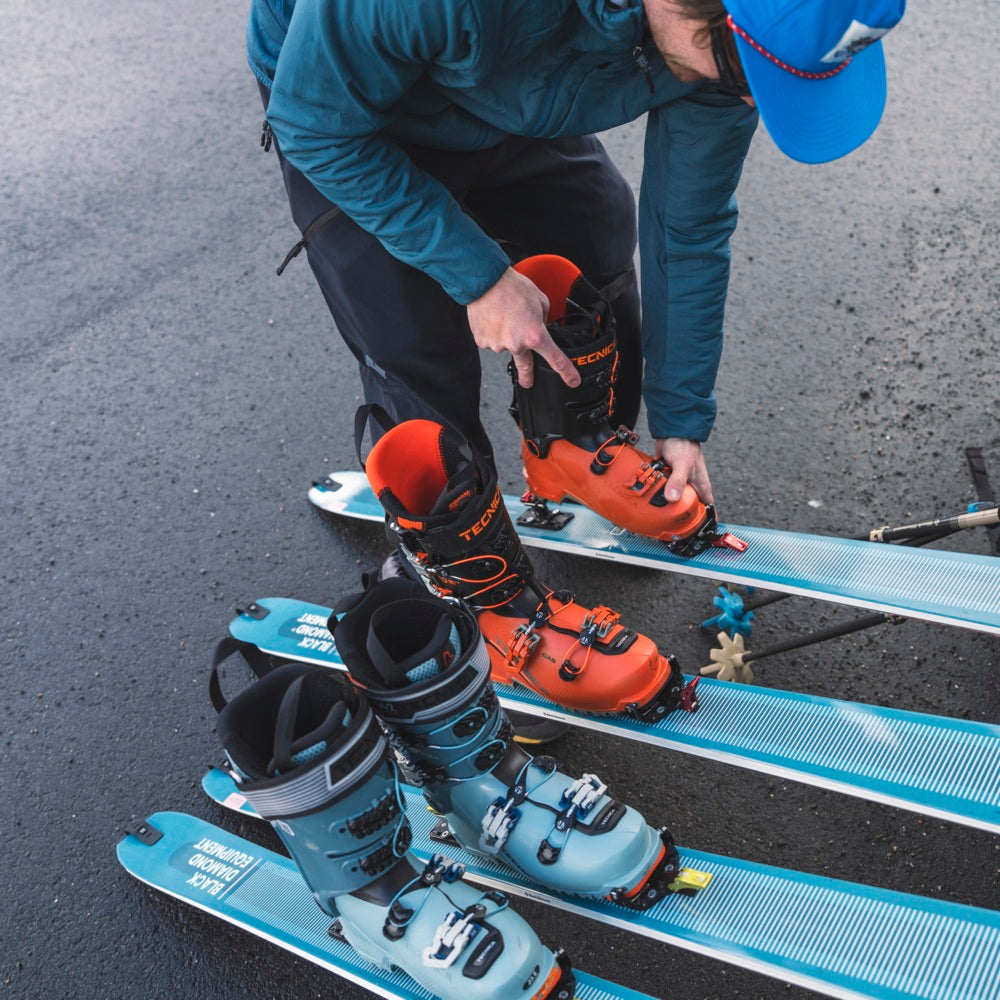
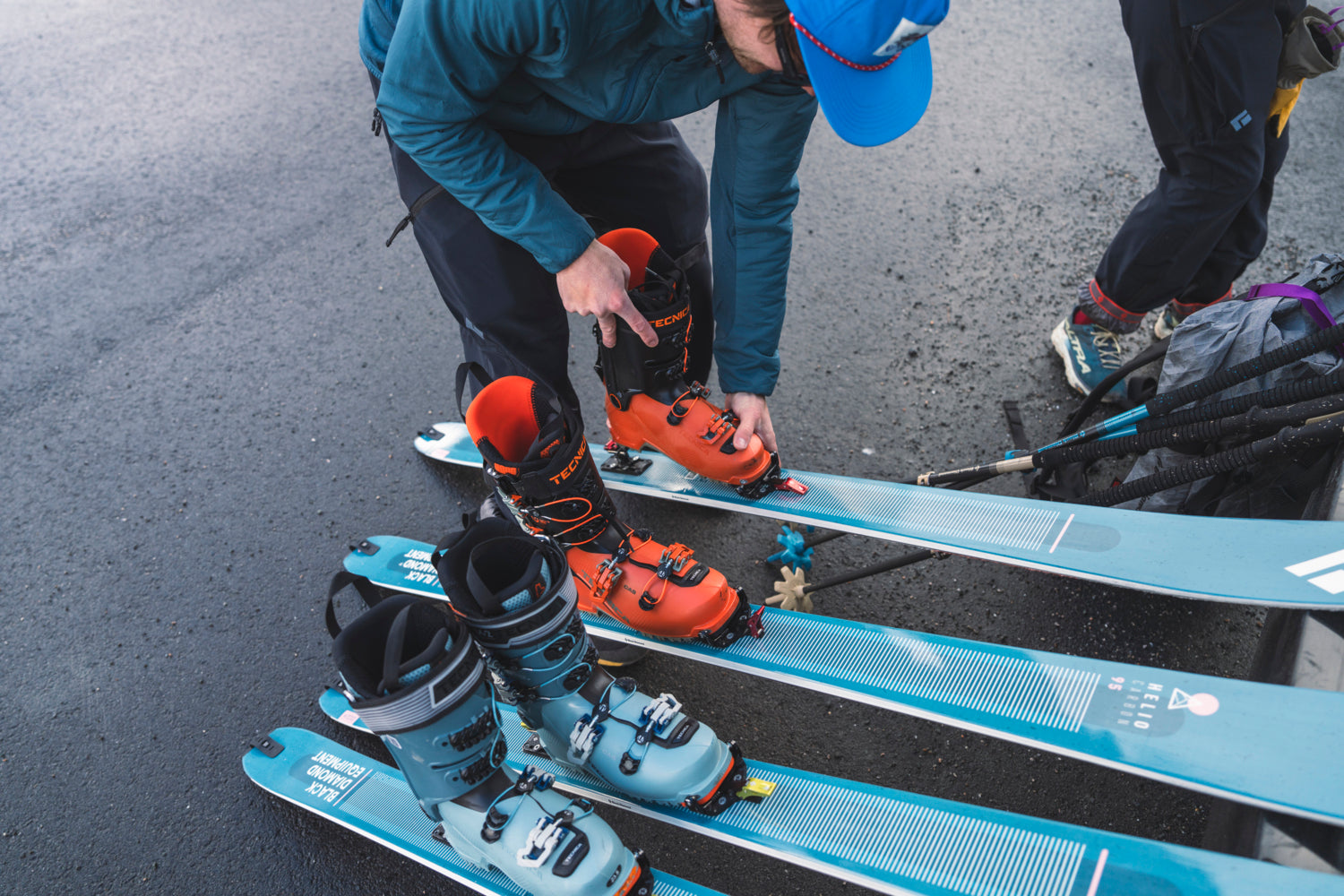
Les fixations à inserts nécessitent impérativement des bottes équipées d'inserts spécifiques : des pièces métalliques à l'avant et à l'arrière conçues pour recevoir les axes de la fixation. Les chaussures de ski alpin classiques ne sont pas compatibles avec ce type de fixations.
Cela signifie que l'utilisation de fixations à inserts nécessite souvent l'achat de nouvelles bottes, ce qui ajoute plusieurs centaines de dollars au coût de l'équipement. Bien que les bottes de ski de randonnée modernes avec inserts offrent d'excellentes performances, cette exigence empêche d'utiliser ses chaussures de ski alpin habituelles pour des sorties occasionnelles.
De plus, les inserts techniques ne se valent pas tous. Les fabricants utilisent des conceptions légèrement différentes, et certaines fixations sont plus compatibles avec certaines marques de chaussures qu'avec d'autres. Il est donc important de tester la compatibilité chaussures-fixations, notamment pour le bon fonctionnement du système de déclenchement, essentiel à la sécurité.
Durabilité en utilisation intensive
Les fixations à inserts sont conçues pour répondre aux exigences de légèreté et de performance en montée du ski hors-piste. Elles ne sont pas adaptées aux impacts répétés, aux réceptions brutales et au ski agressif qui caractérisent la pratique en station ou le freeride extrême en hors-piste.
Les skieurs qui utilisent des fixations à inserts pour les sauts, les journées en station ou les terrains très techniques signalent des taux de défaillance plus élevés et des déclenchements intempestifs plus fréquents. La petite taille des inserts et la légèreté de la construction ne sont tout simplement pas adaptées à ces usages. Les histoires d'inserts cassés, de butées fissurées et de déclenchements inattendus sont courantes chez les skieurs qui sollicitent leurs fixations à inserts au-delà de leurs limites.
Cela ne signifie pas que les fixations techniques sont fragiles : des milliers de skieurs de randonnée les utilisent en toute confiance depuis des années. Mais comprendre leurs limites de conception permet d’avoir des attentes et des habitudes d’utilisation appropriées.
Innovations modernes dans la conception de fixations techniques
Le marché des fixations techniques a connu une évolution spectaculaire depuis 2012, date d'expiration du brevet de Dynafit. La concurrence et l'innovation ont permis de surmonter de nombreuses limitations traditionnelles, offrant ainsi des solutions pour pratiquement tous les styles de ski hors-piste.
Fixations techniques certifiées TÜV
Des modèles comme la série Dynafit ST Rotation, la Marker Kingpin et la Fritschi Tecton ont obtenu la certification TÜV selon les normes de ski de randonnée alpine. Ces fixations intègrent des butées rotatives ou à déclenchement latéral, des systèmes de pression avant et des mécanismes de déclenchement plus sophistiqués qui se rapprochent des caractéristiques des fixations alpines.
Il en résulte un déclenchement plus prévisible et une sécurité accrue, notamment pour les skieurs qui alternent entre station et hors-piste ou qui pratiquent un ski très engagé. En contrepartie, la fixation est plus lourde (généralement de 100 à 300 grammes par fixation par rapport aux fixations à inserts traditionnelles) et plus complexe.
Rétention réglable au niveau des orteils
La nouvelle génération de fixations de ski de randonnée (2026) propose des modèles avec butée avant réglable, remplaçant ainsi la butée fixe à haut maintien qui caractérisait les modèles précédents. Des fixations comme la série ATK Raider EVO permettent d'ajuster le déclenchement de la butée avant en fonction de votre poids et de votre style de ski, pour un déclenchement plus équilibré sur toute la longueur de la fixation.
Cette innovation remédie à l'une des limitations fondamentales des fixations techniques traditionnelles, même si elle ajoute de la complexité mécanique et du poids.
Mécanismes de talon améliorés
Les talonnettes de fixation modernes sont dotées de systèmes de ressorts sophistiqués, d'une élasticité et d'un amortissement qui améliorent les performances en descente. Les talonnettes à goupille, les mécanismes à ressort et les différents systèmes de pression avant contribuent à réduire les déclenchements intempestifs tout en maintenant des marges de sécurité adéquates.
Ces progrès réduisent l'écart de performance entre les fixations de ski de randonnée et les fixations alpines, même si des différences fondamentales subsistent en raison du système de connexion à goupilles.
Systèmes de freins automatiques
Les premières fixations à skis techniques étaient souvent dépourvues de freins ou utilisaient des systèmes de freinage manuels peu pratiques. Les modèles actuels sont équipés de freins automatiques qui se déclenchent au déchaussage, comme les freins de ski alpin. Le système de freinage automatique ATK Raider EVO représente le nec plus ultra, alliant légèreté et fiabilité.
Les freins ajoutent environ 50 à 100 grammes par fixation, mais offrent des avantages cruciaux en matière de sécurité, empêchant les skis de s'emballer en cas de chute, situation dans laquelle la perte de matériel pourrait s'avérer dangereuse ou entraîner des opérations de récupération longues et difficiles.
Comparaison des fixations tech avec les alternatives
Comprendre la place qu'occupent les fixations tech dans le paysage plus large des options de fixations de ski de randonnée permet de déterminer si elles correspondent à vos besoins.
Fixations tech vs. fixations à cadre
Les fixations à cadre représentent l'alternative traditionnelle aux fixations à inserts. Elles ressemblent aux fixations alpines et fonctionnent de la même manière, mais sont montées sur un cadre permettant de relever le talon pour la randonnée.
Les fixations à cadre sont appréciées pour leur prise en main et leurs performances en descente. Elles offrent les mêmes sensations que les fixations alpines, utilisent la norme DIN et sont compatibles avec la plupart des chaussures de ski, y compris les chaussures alpines classiques. Pour les débutants ou les skieurs pratiquant rarement le ski de randonnée, les fixations à cadre constituent une option simple et rassurante.
Cependant, les fixations à cadre sont nettement plus lourdes (généralement de 1 500 à 3 000 grammes par fixation), rendent la marche inconfortable avec le point de pivot situé en avant de l'avant du pied et sont peu maniables en montée. Pour une utilisation régulière en hors-piste, ces inconvénients liés au poids et à l'efficacité deviennent de plus en plus importants.
La plupart des skieurs de randonnée expérimentés choisissent des fixations à inserts plutôt que des fixations à cadre, sauf s'ils ont spécifiquement besoin des avantages des fixations à cadre, comme la compatibilité avec les chaussures de ski alpin ou une sécurité maximale en descente.
Fixations techniques vs. fixations hybrides
Les fixations hybrides comme la Salomon Shift2 et la Marker Duke PT tentent de combiner l'efficacité en montée des fixations à inserts avec les performances en descente des fixations alpines. Elles utilisent des inserts à aux orteils pour la randonnée, mais se convertissent en fixations de type alpin pour la descente.
Les fixations hybrides offrent les meilleures performances en descente de toutes les fixations de randonnée, avec une certification DIN complète et des caractéristiques proches du ski alpin. Pour les skieurs qui partagent leur temps à parts égales entre station et hors-piste, ou qui privilégient avant tout le ski alpin engagé, les fixations hybrides sont un choix judicieux.
Les compromis concernent le poids (900 à 1 100 grammes par fixation), la complexité, le coût (généralement entre 600 et 800 dollars) et les problèmes de durabilité liés à la complexité des mécanismes. Pour une utilisation en hors-piste pure, où le poids et l'efficacité en montée sont primordiaux, les fixations à inserts traditionnelles offrent généralement une meilleure expérience globale.
Qui devrait choisir des fixations Tech/à inserts ?

Les fixations techniques sont particulièrement adaptées à certains usages et styles de ski. Elles constituent le choix par défaut pour :
Randonneurs réguliers en hors-piste : Si vous effectuez plusieurs sorties par mois et parcourez un dénivelé important, les fixations techniques offrent l’efficacité et le confort qui rendent les longues journées agréables.
Ski de randonnée et ski alpinisme : Pour les grandes expéditions, les sorties de plusieurs jours ou les randonnées avec un dénivelé supérieur à 900-1200 mètres, la réduction du poids est cruciale. Les fixations à inserts sont quasiment indispensables pour le ski-alpinisme de haut niveau.
Skieurs soucieux du poids : Ceux qui privilégient un équipement léger et performant se tournent naturellement vers les fixations à inserts. Les adeptes de l'ultraléger peuvent ainsi composer des vélos de randonnée complets pesant moins de 4,5 kg la paire avec des fixations à inserts adaptées.
Skieurs de randonnée expérimentés : Une fois que vous avez acquis de solides compétences en ski hors-piste et que vous comprenez votre style de ski, les fixations à inserts offrent la performance et l’efficacité que les utilisateurs expérimentés apprécient.
Les fixations tech ne sont peut-être pas idéales pour :
Initiation au ski hors-piste : L'apprentissage, tant pour l'utilisation des fixations que pour la compréhension de leurs limites, peut s'avérer complexe. Les fixations à cadre ou les fixations à inserts certifiées TÜV offrent généralement plus de confiance et une meilleure marge d'erreur.
Skieurs de station dynamiques effectuant des excursions occasionnelles : Si vous êtes principalement un skieur de station qui souhaite occasionnellement faire du ski de randonnée sans acheter de nouvelles chaussures, les fixations à cadre sont plus judicieuses.
Skieurs privilégiant une performance maximale en descente : si vos objectifs en hors-piste mettent l’accent sur les descentes raides et techniques plutôt que sur les montées efficaces, les fixations hybrides offrent une meilleure confiance en descente malgré le surpoids.
Prendre votre décision
Choisir entre les fixations techs (et n'oubliez pas que les fixations à inserts sont la même chose) et les alternatives revient à prioriser vos besoins et cas d'utilisation spécifiques.
Posez-vous ces questions essentielles :
À quelle fréquence prévoyez-vous de randonner ? Si vous envisagez des sorties régulières en pleine nature, les avantages en termes d’efficacité des fixations à inserts justifient rapidement toute période d’apprentissage ou d’adaptation initiale.
Quel est votre objectif en termes de dénivelé ? Sur les parcours dépassant 600 à 900 mètres de dénivelé, la réduction de poids des fixations techniques devient de plus en plus précieuse. Sur les parcours plus courts, le surpoids des fixations à cadre est plus acceptable.
Possédez-vous des chaussures de ski de randonnée avec inserts Tech ? Si c’est le cas, les fixations Tech sont le choix évident. Si vous devez de toute façon acheter des bottes, tenez compte de ce coût dans votre décision.
Quel est votre style de ski ? Les skieurs très agressifs, ceux qui sautent ou ceux qui prévoient d’utiliser fréquemment leur équipement de ski de randonnée en station devraient envisager des fixations à inserts certifiées TÜV ou des alternatives hybrides plutôt que des fixations à inserts traditionnelles.
Quel est votre budget ? Les fixations à inserts classiques coûtent entre 400 et 700 $, les modèles certifiés TÜV étant plus chers. Les fixations à cadre commencent autour de 300-400 $, mais nécessitent un investissement moins important dans les chaussures. Les fixations hybrides coûtent généralement entre 600 et 800 $, voire plus.
Conclusion : Adoptez la révolution tech/à inserts
La confusion terminologique entre fixations techs et fixations à inserts masque souvent une vérité plus importante : cette technologie de fixation a révolutionné le ski hors-piste en rendant le ski alpin à propulsion humaine plus efficace, plus agréable et plus accessible que jamais auparavant.
Qu’on les appelle fixations à inserts, fixations de ski de randonnée ou fixations de ski hors-piste, ces modèles légers et mécaniquement simples dominent le marché du ski de randonnée pour de bonnes raisons. Ils facilitent les longues approches, réduisent la fatigue et offrent des performances adéquates pour la plupart des pratiques du ski hors-piste.
Les innovations modernes ont permis de surmonter de nombreuses limitations traditionnelles, offrant ainsi des options aux skieurs confirmés, aux débutants et à tous les niveaux intermédiaires. Les modèles certifiés TÜV garantissent une sécurité accrue, les systèmes de rétention réglables offrent des possibilités d'ajustement et les mécanismes améliorés assurent des performances en descente inégalées.
Pour la plupart des skieurs pratiquant régulièrement le ski de randonnée hors-piste, les fixations à inserts sont le choix idéal. L'apprentissage est rapide et efficace, leurs performances répondent aux exigences du hors-piste et le gain d'efficacité rend chaque sortie plus agréable.
Prêt à trouver les fixations techniques parfaites pour votre équipement de ski hors-piste ? Découvrez notre collection complète de fixations de ski de randonnée, intégrant les dernières innovations technologiques des plus grandes marques. Que vous créiez votre premier équipement de randonnée ou que vous optiez pour des fixations plus légères et performantes, nous vous offrons des conseils d'experts pour vous aider à choisir la solution idéale pour votre style de ski et vos objectifs.