If your fingers go numb halfway down the run, sizing may be the real culprit—not just cold weather. In How to Size Women’s Ski Gloves: The Complete Fit Guide for Warm, Comfortable Hands, you’ll learn exactly how to size ski gloves women so you get the right balance of warmth, dexterity, and protection. This ski glove fit guide walks you through measuring hands for ski gloves, explains how should ski gloves fit, and highlights common sizing mistakes that lead to cold hands. Let’s dial in your women’s ski glove sizing so you can ski longer and feel better on every chairlift ride.
Why Ski Glove Fit Matters (More Than You Think)
Ski gloves are insulation systems, weather shields, and control tools all in one. When the fit is off, performance suffers quickly:
- Too tight = colder hands. Compression reduces airflow within insulation and restricts circulation, which is one of the fastest paths to numb fingers.
- Too loose = heat loss + poor grip. Excess space allows cold air to circulate and makes it harder to hold poles confidently.
- Wrong finger length = pressure points. Fingertips jammed into the glove create cold spots and discomfort; overly long fingers reduce dexterity.
Getting sizing right means you’ll stay warmer with less bulk and have better control when buckling boots, zipping vents, or handling bindings.
Measuring Hands for Ski Gloves (Step-by-Step)
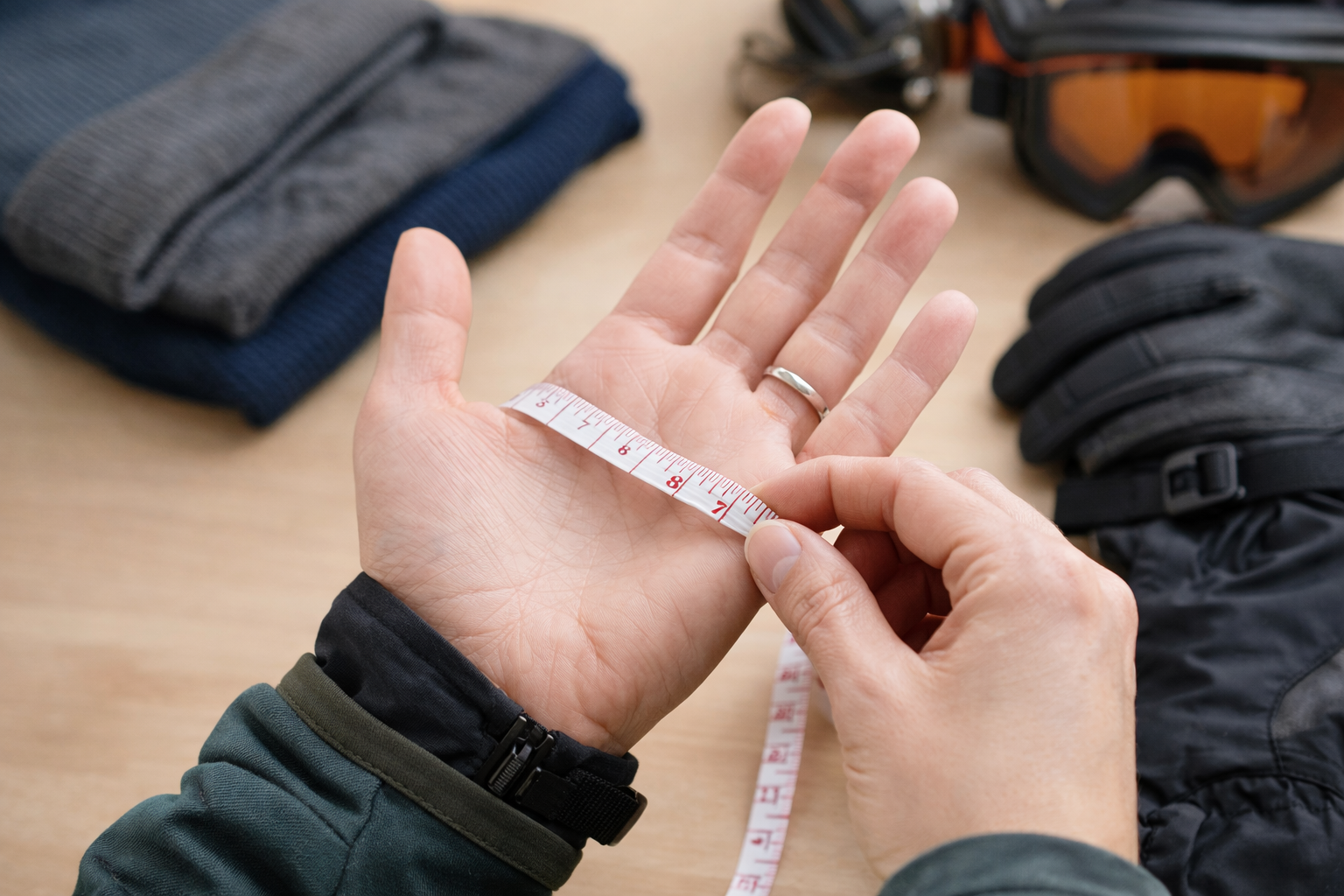
The most reliable way to nail women’s ski glove sizing is to measure your hand and compare it to the brand’s size chart. Here’s how to do it at home.
What you’ll need
- A soft measuring tape (or a string + ruler)
- Paper and pen (optional, but helpful)
Step 1: Measure hand circumference
- Relax your dominant hand and slightly curl your fingers as if holding a pole.
- Wrap the measuring tape around the widest part of your palm (typically across the knuckles), excluding the thumb.
- Record the measurement in inches or centimeters.
Step 2: Measure hand length
- Open your hand flat.
- Measure from the base of your palm (where the wrist crease meets the palm) to the tip of your middle finger.
- Record the measurement.
Step 3: Compare to the brand’s chart
Different brands size differently, so always default to the specific product chart when available. If your circumference and length land in two different sizes, prioritize the measurement that matches how you ski:
- Prioritize circumference for warmth and comfort (circulation).
- Prioritize length if you’re sensitive to fingertip pressure or want more dexterity.

How Should Ski Gloves Fit? (The Checklist)
If you’re wondering how should ski gloves fit, use this quick checklist after trying them on. A proper fit should feel secure, warm, and mobile—without pinching.
- Fingertips: You should have a tiny bit of space at the end (about 2–5 mm). Your fingertips shouldn’t press hard into the glove when you make a fist.
- Palm and knuckles: Snug, not restrictive. You should be able to fully close your hand around a ski pole without strain.
- Thumb: No tight pull when you give a “thumbs up.” Tight thumbs are a common fit issue and can feel cold fast.
- Wrist closure: Should seal comfortably. A good wrist fit keeps snow out and warmth in without cutting off circulation.
- Mobility test: Pretend to clip a buckle, unzip a pocket, or adjust a helmet strap. If you can’t, the glove may be too bulky or too long in the fingers.
Women’s Ski Glove Sizing: Common Fit Problems (and Fixes)
Even when measurements look right, real-world fit can fail due to shape, insulation, or layering. Here are the most common problems in any ski glove fit guide—and how to solve them.
Problem: Gloves feel tight across the knuckles
Likely cause: Circumference too small or glove pattern is narrow.
Fix: Size up, or choose a model known for a roomier fit. Tight knuckles often mean compromised circulation, which equals colder hands.
Problem: Fingers are long but palm fits
Likely cause: Hand length and circumference don’t match standard grading.
Fix: Try brands/models with varied finger lengths. If you’re between sizes, don’t “solve” long fingers by sizing down—cold hands aren’t worth it.
Problem: Gloves are warm at first, then get cold
Likely cause: Slightly too tight, or insulation is compressed by layering.
Fix: Ensure your glove isn’t snug when worn with your preferred under-layers. For overall warmth management, pair your kit with quality base layers to reduce sweat-chill and keep your core warm.
Problem: Too bulky to grip poles or use zippers
Likely cause: Overbuilt insulation for your conditions, or too much extra room.
Fix: Choose a glove with better dexterity or a slimmer profile, especially if you ski actively or in milder temps.
Should You Size Up for Liner Gloves?
Many skiers add thin liners for versatility—wear them alone on spring days or under insulated gloves on cold mornings. If you plan to layer, try your gloves on with the liners you’ll actually use.
- With thin liners: Most people can keep the same size, as long as the glove wasn’t already tight.
- With thicker liners: You may need to size up to avoid compressing insulation and restricting circulation.
If you want to build a flexible system, start with quality liner gloves and then fit your outer glove around them.
Gloves vs. Mittens vs. 3-Finger: Fit Notes for Each
- Five-finger gloves: Prioritize finger length and dexterity.
- Mittens: You can tolerate a bit more internal volume because fingers share warmth.
- 3-finger (lobster) designs: Ensure the split fingers aren’t cramped.
Brand and Model Differences: Why One Size Doesn’t Fit All
Even if you know your measurement-based size, your “true fit” can change by brand and glove construction. Premium brands also tend to have more refined patterning, which can improve comfort at the same size.
For example, many skiers love the feel and durability of Hestra gloves. Still, always check the product chart and test the fit using the checklist above—especially if you’re between sizes.
Quick Women’s Ski Glove Fit Guide: In-Store Try-On Routine
- Put the glove on fully and seat your hand by gently tapping fingertips downward.
- Close all wrist straps or cuffs like you would on the mountain.
- Make a fist 5–10 times.
- Hold a ski pole (or mimic the grip).
- Do a fine motor test like zipping a pocket.
Don’t Forget Conditions: Choosing the Right Warmth Level
- Cold resort days: Insulated gloves or mittens with a secure cuff seal.
- Warm spring laps: Lighter gloves for breathability and dexterity.
- High-output touring: Often best with a modular system (liners + shells).
If you need versatile options beyond skiing—like for scrambling, belays, or cold-weather approaches—consider dedicated technical gloves built for grip and precision.
Shop the Right Size: Find Your Best Fit
Now that you know measuring hands for ski gloves and exactly how should ski gloves fit, you’re ready to choose a pair that keeps you warm without sacrificing control. Browse our women's ski gloves collection to find the right insulation, cuff style, and fit for your skiing—then use the steps in this guide to select your ideal size with confidence.
Call to action: Measure your hand today, compare it to your preferred glove’s size chart, and shop your next pair from our women's ski gloves collection—warm hands start with the right fit.