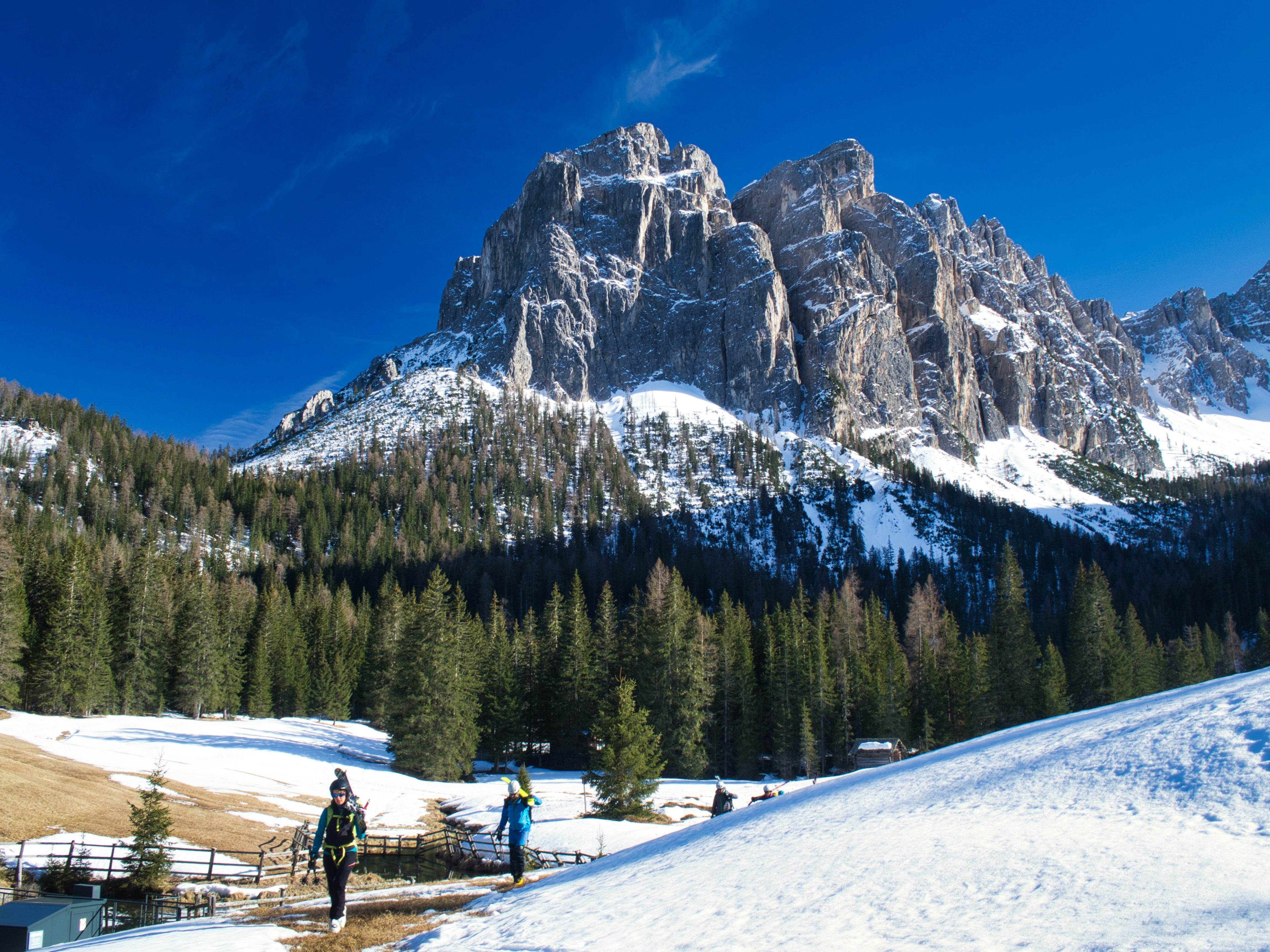
A softshell jacket prioritises breathability, stretch, and comfort for high-output activities in dry or mild conditions, while a hardshell is fully waterproof and windproof — your armour against heavy rain, summit storms, and wet spindrift. For climbers and ski tourers in the Canadian Rockies, the choice comes down to conditions and output level. Browse our men's technical jackets to see both types side by side, or keep reading for the Rockies-specific breakdown.
Key takeaways
- Softshells excel in dry cold and high-output conditions — spring ski touring, mixed climbing, and technical approaches where breathability matters more than waterproofing.
- Hardshells are non-negotiable in heavy rain, wet ice climbing, or on any objective where you can't afford to soak through — think winter multi-pitch or a summit push in deteriorating weather.
- The Canadian Rockies are drier than the coast, which means a softshell covers the majority of spring and summer alpine days — a hardshell sits in the pack as insurance, not as your primary layer.
- Many mountaineers carry both — a softshell on the uptrack, a hardshell stuffed in the lid of the pack for the descent or a weather window that closes unexpectedly.
- Windbreakers are a third option worth understanding: lighter and more packable than either, they work in dry, cold conditions but offer less weather protection than a true hardshell.
What is the difference between a softshell and a hardshell jacket?
The defining difference is waterproofing: a hardshell has a waterproof membrane (typically Gore-Tex or an equivalent 2.5L or 3L laminate) with fully taped seams, while a softshell relies only on a DWR (durable water-repellent) coating and will soak through in sustained rain. In exchange for giving up full waterproofing, the softshell gains dramatic breathability and 4-way stretch — properties that make it the preferred choice on a skin track or a long climbing approach where heat management matters as much as weather protection.
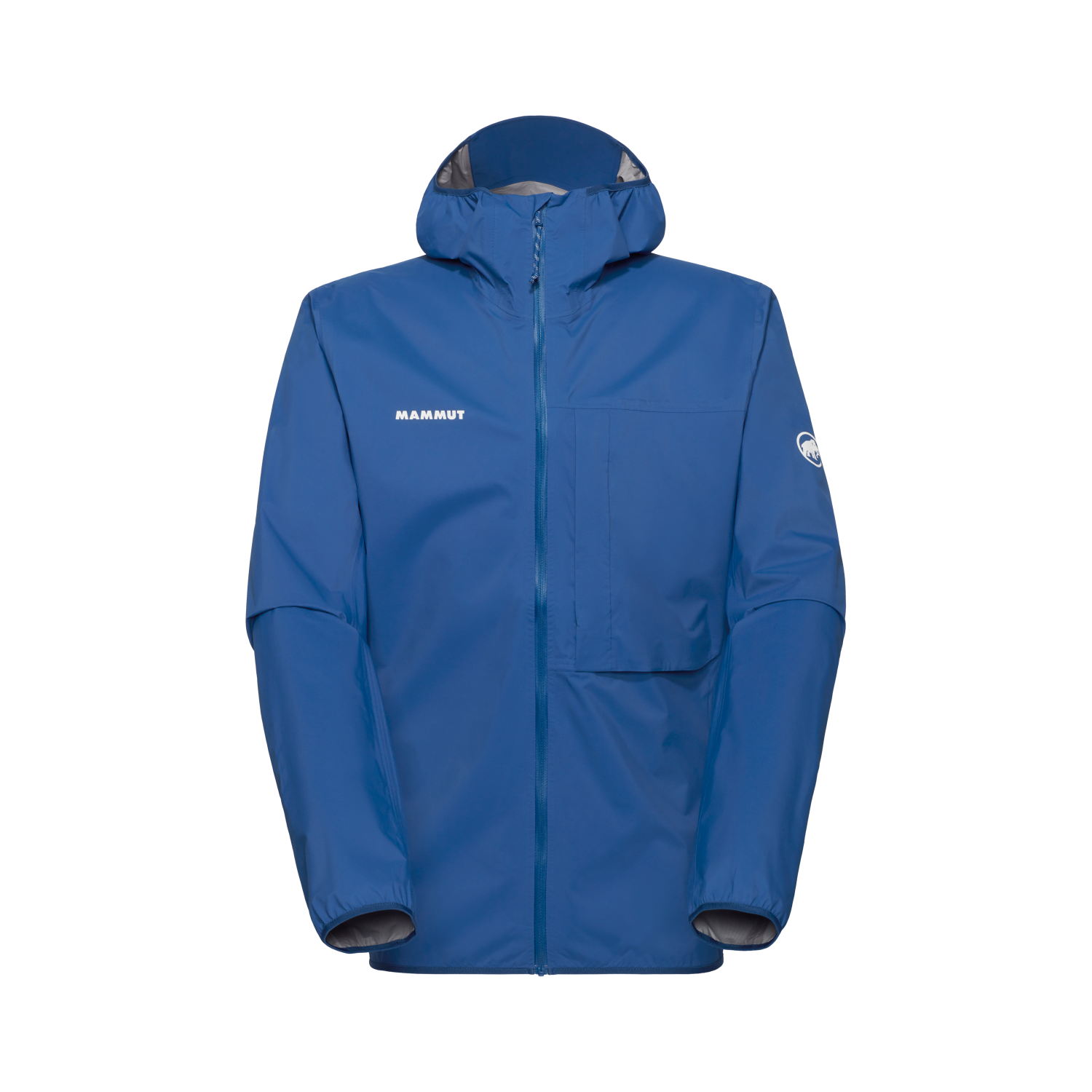
Hardshells are stiffer and less forgiving on movement, though modern 3-layer constructions have closed the gap significantly. A jacket like the Flylow Lab Jacket GTX 3L or the Mammut Taiss Pro HS Hooded moves far better than hardshells of a decade ago, but they still can't match the articulated stretch of a purpose-built softshell like the Ortovox Seceda Softshell. Understanding that trade-off is the starting point for every jacket decision in the mountains.
What is a windbreaker, and how does it fit in?
A windbreaker — like the Ortovox Trace Windbreaker or the Mammut Aenergy WB Hooded — is a lightweight, packable shell that blocks wind and sheds light precipitation, but offers less weather resistance than either a softshell or hardshell. It occupies the "dry cold, very high output" niche: think trail running above treeline in October, or fast-and-light alpine routes on stable days. The three types are compared in detail in the table below.
How do softshell and hardshell jackets compare head-to-head?
Across the five criteria that matter most to alpine athletes — waterproofing, breathability, stretch, packability, and price — softshells and hardshells make opposite trade-offs, with windbreakers occupying a lighter, more minimal third position. The table below maps those trade-offs using the specs and price ranges from the jackets we stock at Vertical Addiction.
|
Feature |
Softshell |
Hardshell |
Windbreaker |
|
Waterproofing |
Water resistant (DWR only) |
Fully waterproof (sealed seams) |
Water resistant (DWR) |
|
Breathability |
★★★★★ |
★★★ |
★★★★ |
|
Stretch / Mobility |
High (4-way stretch typical) |
Low to moderate |
Moderate |
|
Packability |
Moderate |
High (varies by model) |
Very high |
|
Weight |
300–500 g typical |
200–600 g (wide range) |
100–200 g |
|
Warmth (shell only) |
Moderate (brushed interior) |
None |
None |
|
Best use |
High-output in dry cold |
Severe weather, rain, summit pushes |
Layering, high-output in dry conditions |
|
Price range (CAD) |
$200–$400 |
$240–$510 |
$190–$240 |
One pattern worth noting in the price column: the most affordable hardshells (the Mammut Ducan Light HS) and the most affordable softshells (Mammut Granite SO) land at roughly the same price point. The premium is not in the category — it's in the construction layers. A 3-layer hardshell with fully taped seams costs significantly more than a 2-layer version, and the same is true for softshells with 4-way stretch laminates versus woven stretch fabrics.
When should you use a softshell vs a hardshell in the Canadian Rockies?
The Canadian Rockies sit in a continental climate — drier and colder than the coast — which shifts the balance toward softshells for a larger share of the season than most jacket guides written for BC, Scandinavia, or the Pacific Northwest would suggest. The Ghost, Kananaskis, and the Icefield Parkway typically deliver cold, dry air with precipitation arriving as snow rather than rain, making breathability on the approach and skin track more valuable than full waterproofing on the majority of days.
The exception is the shoulder seasons. April, May, and October in the Bow Valley can deliver warm front systems that bring wet, heavy snow or mixed rain at mid-elevation — conditions that will soak through a softshell within an hour. Anyone heading above 2,500 m in those months should carry a hardshell in the pack regardless of the morning forecast.
The table below maps the softshell vs hardshell decision across the seven activities we outfit most frequently at the Canmore shop. Use it as a starting framework, then adjust for the day's forecast.
|
Activity |
Recommended jacket type |
Why |
Example from our inventory (CAD) |
|
Spring ski touring (Apr–Jun) |
Softshell |
High output on the skin track; Rockies spring is dry cold, not wet |
Black Diamond Dawn Patrol Softshell |
|
Summer alpine climbing (Jul–Sep) |
Softshell + packable hardshell in pack |
Mobility on rock; hardshell as storm insurance for afternoon convective weather |
Black Diamond Alpine Start Hoody |
|
Fall multi-pitch (Sep–Oct) |
Softshell or hardshell (forecast-dependent) |
Shoulder season is unpredictable — hardshell if rain or wet snow is in the forecast |
Ortovox Punta Berrino Hooded Jacket |
|
Winter ice climbing (Nov–Mar) |
Hardshell over insulated layer |
Wet ice spray combined with cold temperatures demand full waterproofing |
Mammut Taiss Pro HS Hooded |
|
Mixed climbing / drytooling |
Softshell |
Freedom of movement; typically cold but dry crag conditions |
Mammut Eiger Nordwand Pro SO Hooded Jacket |
|
Ski touring to remote hut |
Hardshell |
Variable multi-day conditions; protection from spindrift and blowing snow |
Black Diamond Recon Stretch Shell |
|
Via ferrata / scrambling |
Windbreaker or light softshell |
Minimal weight; harness compatibility; typically dry conditions |
Ortovox Trace Windbreaker |
Is a hardshell or softshell better for ski touring?
For the skin track, a softshell is almost always the better choice — a hardshell traps sweat at high output and leaves you clammy before you reach the col. The breathability gap between a quality softshell and even the most breathable hardshell is significant enough to matter over a 4–6 hour approach. The Black Diamond Dawn Patrol Softshell or the Ortovox Seceda Softshell Jacket are the two softshells we recommend most often to ski tourers heading into the Rockies backcountry.
The nuance comes at the top. If you're doing a spring touring objective where the descent involves a long exposed ridge in variable weather, a packable hardshell in the top pocket of the pack is worth the 200–300 g. The two-jacket system — softshell up, hardshell over for the summit and descent — is how most Bow Valley guides manage a full touring day. For multi-day hut-to-hut touring where you can't predict conditions over several days, a hardshell becomes the better primary shell. See our backcountry ski and touring collection for the full range of shell options paired with ski touring gear.
For layering strategy across the full touring day, our guide on building your layering system for spring ski touring covers base-to-shell sequencing in detail.
Is Gore-Tex hardshell or softshell?
Gore-Tex is a waterproof membrane used primarily in hardshell jackets, but it also appears in some softshell constructions — the membrane alone doesn't determine the jacket category. What distinguishes a hardshell is the fully taped seams and the face fabric's laminate construction (2L, 2.5L, or 3L), which together make the jacket waterproof from every angle. A Gore-Tex softshell uses the same membrane bonded to a stretch fabric, but the seams are typically not fully taped, which means it remains water-resistant rather than waterproof.
In practical terms: Gore-Tex Pro (found in jackets like the Flylow Lab Jacket GTX 3L) is a hardshell construction designed for prolonged exposure to severe weather. Gore-Tex Paclite or Gore-Tex Shakedry constructions appear in lighter hardshells. If a jacket is described as "Gore-Tex softshell," it offers excellent weather resistance but should not be treated as waterproof in a downpour or prolonged wet conditions. When in doubt, look for "fully taped seams" in the product specs — that's the clearest indicator of true hardshell construction.
How do you layer a softshell under a hardshell?
A softshell used as a mid-layer under a hardshell is one of the most effective cold-weather systems for alpine climbing and ski touring — the softshell provides warmth and moisture management, while the hardshell adds a fully waterproof outer barrier. The key is choosing a softshell with a slim enough cut to fit under the hardshell's shell without restricting movement or creating pressure points around the shoulders and armpits.
The most common mistake is layering a thick, heavily insulated softshell under a hardshell and then overheating on the approach. A lighter softshell — the Black Diamond Alpine Start Hoody or the Mammut Granite SO — works better under a shell than a premium alpine softshell designed to be worn alone. The premium softshell is for the days when the weather is stable and the hardshell stays in the pack. For the full breakdown of how to sequence base, mid, and shell layers across different output levels and temperatures, see our base layer weight guide for mountain athletes, which covers the foundation of the system.
When ice climbing in winter, the hardshell-over-insulation system works differently: an insulated belay jacket like the Mammut Rime Pro Belay IN Hooded goes on at the base of the climb or during long belays, while the hardshell remains the constant outer layer. For more on building a kit that transitions between rock season and ice season, our guide on transitioning your climbing gear from rock to ice season is worth a read.
What about packable wind and rain shells — is there a third category to consider?
Yes — packable wind and rain shells (windbreakers and ultralight hardshells) occupy a specific niche that neither a full softshell nor a heavyweight hardshell covers well: fast-and-light alpinism, trail running above treeline, and any objective where weight is the primary constraint. At 100–200 g, a windbreaker like the Ortovox Trace Windbreaker or La Sportiva Freeway Wind Jacket adds almost nothing to a pack and provides meaningful wind protection and light precipitation resistance for high-output days with stable forecasts.
The trade-off is durability and sustained weather resistance — a windbreaker will not protect you through a two-hour hailstorm at 3,000 m the way a 3-layer hardshell will. For a detailed comparison of the packable shell category specifically, our guide to the best lightweight wind and rain jackets for the Rockies covers the options in depth.
Frequently asked questions about softshell vs hardshell jackets
What temperature is a softshell jacket good for?
A softshell works best in cold-to-mild conditions ranging from approximately -10 °C to +10 °C, paired with appropriate base layers. In the Canadian Rockies, this covers the majority of spring ski touring days (morning temps of -5 °C to 0 °C) and most of the summer alpine climbing season. Below -15 °C, most softshells benefit from an insulated mid-layer underneath. Above +10 °C in humid conditions, the DWR coating may be insufficient to keep you dry.
Can you wear a softshell jacket in the rain?
A softshell will handle light rain and brief showers through its DWR coating, but will eventually soak through in sustained precipitation. In the Canadian Rockies, where rain at elevation is less common than on the coast, a quality softshell covers the majority of days — but if the forecast shows a warm front with rain above 2,000 m, pack a hardshell. The typical softshell stays weather-resistant for 30–60 minutes of moderate rainfall before saturation begins.
Can a softshell be used in winter in the Canadian Rockies?
Yes — for dry cold days with stable weather, a softshell is often the preferred choice for winter activities like mixed climbing, drytooling, and high-output ski touring. Rockies winters are predominantly cold and dry, which plays to the softshell's breathability advantage. For wet snow or rime-ice conditions — particularly on routes that face east or get wind-loaded — a hardshell over an insulated layer is the safer system.
What's better for rock climbing: a softshell or a hardshell?
A softshell is almost universally preferred for rock climbing because of the 4-way stretch fabric and its ability to move with the body on technical terrain. The Rockies climbing season (May–October) is predominantly dry, so full waterproofing is rarely needed at the crag. We outfit most rock climbers with a softshell like the Black Diamond Solution 2.0 as their primary climbing layer, with a packable hardshell or windbreaker in the pack for the approach and any weather changes. Explore our rock and ice climbing collection for softshell options suited to technical terrain.
Do I need both a softshell and a hardshell?
For most Rockies alpinists and ski tourers, yes — the two jackets serve fundamentally different conditions and the combined system is more versatile than any single jacket. The softshell handles 70–80% of days in this climate; the hardshell earns its place on the 20–30% of days where weather deteriorates. Budget-conscious buyers should prioritise the softshell first if they're primarily climbing or touring in stable spring and summer conditions, and add the hardshell as their objectives extend into autumn or involve multi-day hut-to-hut terrain.
Where to start?
The right jacket for you comes down to the activity, the forecast, and the season — and there's rarely a single answer that covers every objective in a Rockies year. If you're primarily a spring ski tourer or a summer rock climber, start with a softshell and treat a packable hardshell as your emergency layer. If ice climbing or multi-day hut-to-hut touring in variable conditions is your focus, the hardshell earns the top position in your kit.
To shop online, start with these collections:
- Men's technical jackets — the full range of softshells, hardshells, insulated jackets, and windbreakers in one place, with helmet-compatible hood specs noted on each product
- Men's softshell jackets — 4-way stretch shells for climbing, ski touring, and high-output alpine days from Mammut, Ortovox, Black Diamond, and Flylow
- Men's insulated jackets — packable belay jackets and midlayers for cold starts and waiting out the belays
- Rock and ice climbing gear — the full climbing kit, including approach and crag outerwear
- Ski touring and backcountry ski gear — shells, layers, and touring equipment for the Rockies backcountry
If you're unsure which system fits your objectives this season, come into the shop at 1300 Railway Avenue in Canmore — we can walk through your planned routes and help you build a layering kit that actually covers the conditions you'll face, not the conditions on the tag.