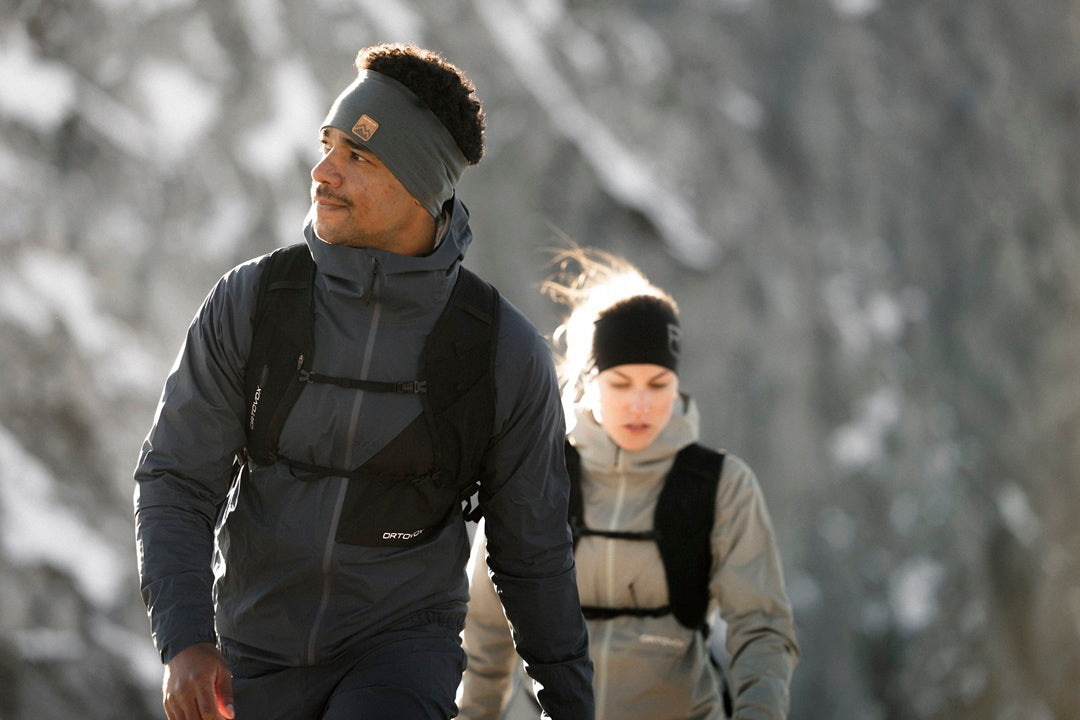
Canadian winter doesn’t negotiate. From humid Pacific storms to dry Rockies cold snaps, and from shoulder-season rain to mid-winter spindrift, the reality for guides and serious mountain athletes is the same: your base layer is your first line of comfort and safety. It has to manage sweat on the skin, stay warm when conditions turn, and keep smelling reasonable when you’re stringing together big days.
That’s where Ortovox Rock'N'Wool comes in. Built around 100% merino wool (virgin wool) at 185 g/m², Rock’N’Wool is designed to be the kind of mountain guide gear you can rely on for long tours, hut weeks, and cold belays—without overcomplicating your layering system.
If you’re shopping from Vertical Addiction, start with the full Ortovox collection or browse all Base Layers to compare options across brands and weights.
Brand spotlight: Why Ortovox is on so many guide racks
Ortovox has built a reputation in the mountain community by focusing on practical, field-driven design. For guides, the appeal is rarely about hype—it’s about predictable performance: gear that layers cleanly, feels good against the skin, and handles the day-to-day realities of packs, harnesses, and repeated use.
In the Rock’N’Wool line, Ortovox positions merino as a cornerstone material: soft, moisture-regulating, temperature regulating, odor neutralizing, easy to care for, and a sustainable raw material. Ortovox also notes Tasmanian origins and emphasizes sustainable production as part of the story behind their merino program. For Canadian users who live in base layers half the year, those priorities align with what matters: comfort, performance consistency, and responsible material choices.

What “Rock’N’Wool” is (in practical terms)—and where 185 g/m² fits
At its simplest, Ortovox Rock'N'Wool is a family of merino wool base layers built with 100% merino wool (virgin wool). The “185” designation refers to fabric weight: 185 g/m². That number matters because it’s a sweet spot for Canadian mountain use.
Why 185 g/m² is a go-to for Canadian conditions
- Warmth without bulk: Heavy enough for cold mornings, chairlift laps, and long transitions, without feeling like a sweater under your jacket.
- Broad season range: Works from early winter through spring touring. Many guides keep 185-weight merino in rotation for most of the season.
- Layering-friendly: Slides well under a midlayer and shell without creating pressure points in the shoulders, neck, or waist.
If you’re deciding between cuts and styles, it helps to shop within the dedicated categories: Men Base Layers and Women Base Layers.
Material innovation: Why 100% merino matters in the mountains
Not all base layers feel the same at hour six of a storm day or hour three of a skin track. The reason guides gravitate toward high-quality merino wool base layers is the way merino behaves across changing effort levels and temperatures—especially when conditions are wet, windy, or inconsistent (which is… most Canadian days).
Moisture buffering: Sweat management without the clammy feel
Ortovox describes merino as able to absorb moisture without feeling wet. Practically, that means when you’re working hard—bootpacking a couloir, setting a track, or guiding a group—your base layer can take the edge off sweat spikes.
Ortovox also notes that merino transports moisture into the fiber core and slowly releases it. In real-world terms, that buffering helps reduce the “soaked then chilled” cycle that’s common with fast-paced transitions (skin → ridge → ski) or stop-and-go guiding (movement → client management → belay).
Thermoregulation: Comfort across a wide effort range
Ortovox highlights merino’s temperature regulation. Guides don’t get to choose perfect pacing: you might be running warm breaking trail, then standing still in a spindrift funnel while someone adjusts a crampon. A 185 g/m² merino layer is often warm enough to take the bite off those static moments, yet breathable enough to keep you functional on the climb.
Odor prevention: The multi-day advantage
Merino’s odor prevention / odor neutralizing characteristics are a big reason it shows up in guide kits. If you’ve ever done a hut week, a storm cycle with back-to-back tours, or a multi-day instructional program, you already know the value: fewer washes, less funk, and a base layer you can wear again without thinking twice.
Next-to-skin comfort and easy care
Ortovox positions merino as soft and easy to care for. Comfort matters in guiding because discomfort becomes distraction—itchy fabric, hot spots, or bunching under a harness is more than annoying on a 10–12 hour day. A base layer should disappear while you focus on weather, terrain, and people.
Durability & guide-proofing: Field-testing practices (what to look for)
Guides are hard on base layers: shoulder straps grind fabric, harnesses rub at the hips, radio and beacon carry points create localized wear, and frequent use exposes any weak stitching or fit issues fast. Rather than inventing lab numbers, here’s a field-testing checklist you can use to judge whether a merino base layer is “guide-proof” for your style of work and training.
1) Harness and hip-belt abrasion zones
- Check fabric at the hips and lower back: That’s where touring hip belts and climbing harnesses can create repeated friction.
- Look for early pilling: Some pilling is normal with wool, but watch for rapid thinning in high-friction areas.
- Pay attention to waistband comfort: A base layer that rolls or bunches under a harness becomes a long-day problem.
2) Pack-strap wear at the shoulders
- Inspect after big days: Shoulder panels often show the first signs of fuzzing, pilling, or abrasion.
- Fit matters: Excess fabric can fold under straps; overly tight fabric can be stressed and wear faster.
3) Seam placement and “hot spot” management
Seams are where comfort and durability meet. On long guiding days, poorly placed seams can rub under straps or along the sides of a harness. When you try on a base layer, move like you’re working: reach overhead, simulate pole plants, twist at the torso, and check for seam pressure points.
4) Cuff, hem, and collar resilience
- Cuffs: If you’re constantly pulling sleeves up and down for venting, cuffs take a beating.
- Hem length: A longer hem tends to stay tucked during transitions and client management, reducing cold gaps.
- Collar/neck opening: A comfortable neck helps prevent chafe—especially if you wear a neck gaiter daily.
Care tips that help merino last (without babying it)
- Rotate layers: If you guide multiple days in a row, rotating two base layers can reduce wear and extend lifespan.
- Air it out: Because merino helps with odor, you can often air-dry between days instead of washing every use.
- Wash thoughtfully: Follow the garment care label; in general, gentle cycles and avoiding harsh treatment helps maintain fabric integrity.
- Keep hook-and-loop away: Backpack straps, glove cuffs, and some shells have hook-and-loop that can snag wool.

Choosing the right Rock’N’Wool piece and fit
When you’re choosing base layers for Canadian mountain days, the “best” option is the one that fits your typical pace, layering system, and the kind of guiding or training you do most. Start by browsing the right category: Men Base Layers or Women Base Layers. You can also compare against other Base Layers to dial in weight and features.
Fit guidance: snug, but not restrictive
- Go close-to-skin: Base layers work best when they can move moisture from your skin into the fabric.
- Avoid compression hot spots: Too tight can feel restrictive under a pack and can stress fabric at elbows and shoulders.
- Mind torso length: Guides often prefer a slightly longer cut to stay tucked under a harness and during overhead movement.
Long sleeve vs. zip neck (how to decide)
- Long sleeve crew: Clean layering under midlayers; fewer moving parts; great for consistent cold and for people who vent by adjusting shells.
- Zip neck: Built-in venting for high output. If you run hot on the skin track but cool quickly when stopped, a zip can be the simplest way to regulate without changing layers.
How to layer Rock’N’Wool for touring, skiing, and alpine days
- Base: Ortovox Rock’N’Wool 185 as your next-to-skin layer.
- Midlayer: Add insulation based on pace and temperature (light for high-output tours, warmer for cold resort or long belays).
- Shell: Use a breathable shell for wind and precipitation management. Open vents early to stay ahead of sweat.
The goal is to keep your base layer doing what merino does best: managing moisture swings, maintaining comfort, and reducing odor build-up so you can focus on decision-making.
Value proposition: Why guides pay for merino (and when you shouldn’t)
Merino often costs more than basic synthetics, but the value is easier to see when you frame it the way guides do: cost per use, not cost per garment.
Where Rock’N’Wool earns its keep
- Fewer washes: Merino’s odor neutralizing properties can mean less laundry on trips and fewer “must wash” moments at home.
- Multi-season versatility: 185 g/m² works across a wide range of Canadian conditions, reducing the need for multiple weights for many users.
- Comfort under pressure: A base layer that stays comfortable under pack straps and harnesses is worth a lot over long days.
Merino vs synthetics (high-level, no hype)
Synthetic base layers can dry very fast and are often highly durable, which some athletes prefer for high-abrasion use. Merino, on the other hand, is prized for comfort, thermoregulation, and odor control—especially when you’re wearing the same piece repeatedly. Many Canadian guides keep both in the kit and choose based on trip type, expected wetness, and how many days they’ll be wearing the layer.
Who it’s for / who should look elsewhere
- Great for: Canadian mountain athletes, ski tourers, alpine climbers, and working guides who want reliable moisture regulation, comfort, and odor control in a 185-weight layer.
- Consider other options if: You’re extremely hard on elbows/shoulders daily (e.g., frequent rock contact), you prioritize maximum quick-dry above all else, or you want a lower-cost layer for occasional use.
FAQ: Ortovox Rock’N’Wool and merino wool base layers
1) Is Ortovox Rock’N’Wool 185 really 100% merino?
For the Rock’N’Wool 185 pieces referenced here, Ortovox specifies 100% merino wool (virgin wool) and a fabric weight of 185 g/m².
2) Will merino keep me warm if I sweat?
Ortovox highlights merino’s ability to absorb moisture without feeling wet and to transport moisture into the fiber core and slowly release it. In practice, that moisture buffering helps reduce clamminess and chill during transitions.
3) Do merino wool base layers really help with odor on multi-day trips?
Ortovox describes merino as offering odor prevention / odor neutralizing. That’s one of the main reasons guides choose merino for multi-day use: it stays more wearable between washes than many alternatives.
4) Is 185 g/m² warm enough for Canadian winters?
For many users, 185 g/m² is a versatile “daily driver” weight. Your warmth will depend on output level, midlayer choice, and wind protection, but 185 often works well from cold resort days to touring—especially when paired with an appropriate insulating midlayer and shell.
5) How should a merino base layer fit for guiding?
Snug next-to-skin is ideal for moisture management, but it shouldn’t restrict movement or create pressure points under pack straps or a harness. Pay attention to torso length and shoulder comfort when you move dynamically.
6) How do guides make merino last longer?
Common guide habits include rotating two base layers, airing them out between days, washing only when needed (following the garment’s care label), and keeping hook-and-loop materials away to prevent snags.
7) Where can I shop Ortovox and compare base layer options?
Browse the full Ortovox collection, compare across all Base Layers, or jump directly to Men Base Layers and Women Base Layers.
Conclusion: A base layer built for real Canadian mountain days
In guiding and serious mountain training, comfort is performance. The better your base layer manages moisture, temperature swings, and odor, the more consistent you feel across long days—and the easier it is to keep your layering system simple.
Ortovox Rock'N'Wool 185 is a practical choice because it leans into what merino does best: moisture-regulating comfort, temperature regulation, and odor neutralizing performance in a versatile 185 g/m² weight—exactly the mix many Canadians want in dependable mountain guide gear.
Ready to build your kit? Shop the Ortovox collection or explore all Base Layers to find the right merino system for your season.